



In the heavy-duty world of mineral processing, a grinding ball is often viewed as a simple commodity. However, for those of us on the production floor, we know that a mill’s efficiency is won or lost in the foundry. The casting ball manufacturing process is a delicate orchestration of temperature, chemistry, and timing that determines whether a ball will last for months or shatter in days.
Precision Starts with the Mold
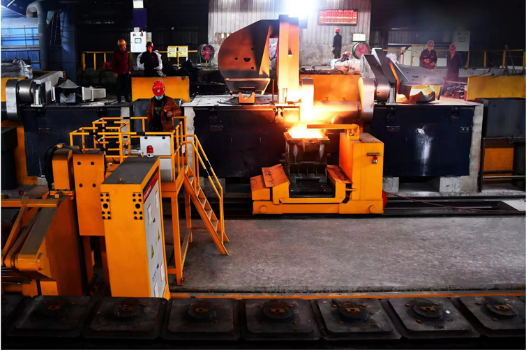
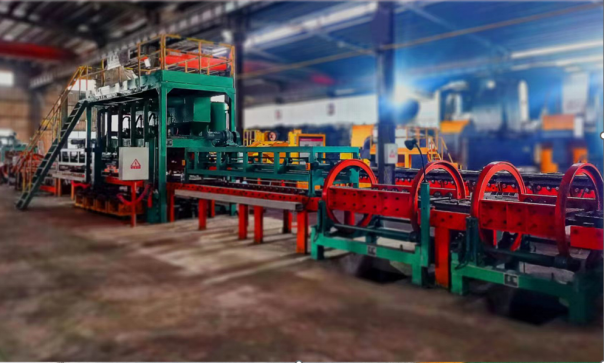
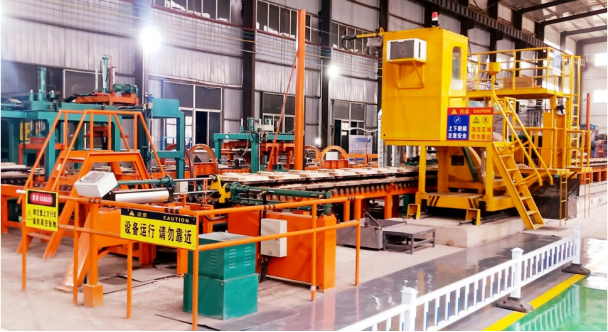
The transition from traditional manual casting to a sophisticated automatic molding line for grinding balls has been the biggest leap in the industry. At Huafeng, the use of iron mold sand coating technology ensures that each ball has a uniform surface and internal density. Unlike older sand-casting methods, this precision molding prevents common defects like air holes or shrinkage, which are the primary causes of premature breakage in high-impact mills.
The Alchemy of Heat Treatment
Raw casting is only half the battle. The true “soul” of the ball is developed during the quenching and tempering heat treatment. By rapidly cooling the balls in a controlled oil or water medium and then reheating them to relieve internal stress, we achieve a martensitic structure that is incredibly hard yet resilient. This is why professional steel grinding ball foundry products can maintain a consistent hardness from the surface all the way to the core, rather than just having a “hard skin.”
Rigorous Quality Benchmarks
You can’t manage what you don’t measure. Effective grinding media quality control involves more than just a quick visual check. It requires spectrometer analysis to verify chrome levels, Rockwell hardness testers for every batch, and drop ball tests to simulate years of impact in minutes. When a supplier is transparent about their manufacturing steps, it’s a sign that they prioritize the buyer’s long-term operational stability over short-term volume.
Frequently Asked Questions (FAQ)
Why is “Iron Mold Sand Coating” better than traditional sand casting?
Iron mold sand coating provides a much higher cooling rate and better dimensional accuracy. This results in a finer grain structure within the metal, significantly improving the wear resistance and toughness of the high chromium casting iron balls.
How does the tempering process prevent the balls from breaking?
After quenching, the balls are extremely hard but brittle. Tempering is a critical step that “toughens” the ball by reducing internal stresses without sacrificing significant hardness, ensuring it can withstand the constant collisions inside a ball mill.
What role does the chemical composition play in the manufacturing process?
The balance of carbon, chromium, and manganese is vital. For example, Chrome is the primary element for hardness, but it must be balanced correctly during the melting stage to ensure the balls are not too brittle for high-impact gold or iron mine environments.